Why game discovery matters for multiplayer players
Why game discovery matters for multiplayer players

Game discovery is the deciding factor that turns a good multiplayer game into a thriving one. Without it, even the most polished title can launch into silence, never reaching the player population it needs to sustain matchmaking, social rituals, or repeat sessions. Creator-driven discovery now accounts for roughly 24% of how players find new games — more than twice the share of digital storefronts like Steam. That single figure explains why YouTube, TikTok, Instagram, Discord, and tools like PickThe.Games have become the real engines of multiplayer growth. The sections below cover where discovery actually happens, why it shapes your multiplayer experience directly, what developers are doing about it, and what your group can do right now.
Table of Contents
- Why game discovery matters for online gaming
- How discoverability shapes your multiplayer experience
- Why great reviews alone won't save a multiplayer game
- How developers design games to be discovered
- What your group can do to find the right games
- Platform-locked discovery and why it holds multiplayer back
- Key takeaways
- The case for taking discovery seriously
- Find your group's next game with Pickthe
- Useful sources
Why game discovery matters for online gaming
The dominant discovery channels today are social and video platforms, not storefront browse pages. YouTube leads, followed by TikTok and Instagram, with creator coverage carrying particular weight for indie and AA studios that cannot afford traditional advertising. Friend recommendations and Discord communities sit just behind, acting as trusted filters in a market flooded with new releases.
Gamers collectively spend extensive hours per year watching video and social gaming content. That volume makes social feeds the highest-traffic discovery surface in the industry, and it explains why a single viral clip can move a game's concurrent player count faster than any storefront promotion.
| Discovery channel | Estimated share / scale | Source |
|---|---|---|
| Creator-driven (YouTube, TikTok, Instagram) | roughly 24% of how players find new games | Bain research via GamesIndustry.biz |
| Video/social content consumed | a very large volume annually | Newzoo figure via TotallyHuman |
| Digital storefront browse (e.g. Steam) | less than creator-driven share | GamesIndustry.biz |
The typical player journey runs: repeated exposures on social or video → genuine interest → store page visit → wishlist or purchase. Pointing someone straight to a Steam page without that warm-up phase usually produces a high bounce rate. External social momentum also feeds Steam's own algorithms, so the two channels reinforce each other rather than compete.
Pro Tip: If your group wants to discover new multiplayer games efficiently, start on YouTube or TikTok for initial exposure, then use Discord to share shortlists before anyone commits to a purchase.How discoverability shapes your multiplayer experience
Discovery creates and sustains the player populations that multiplayer systems depend on. Without a critical mass of active players, the downstream effects are immediate and painful: longer queue times, thinner skill brackets, fewer active servers, and sessions that simply do not happen.
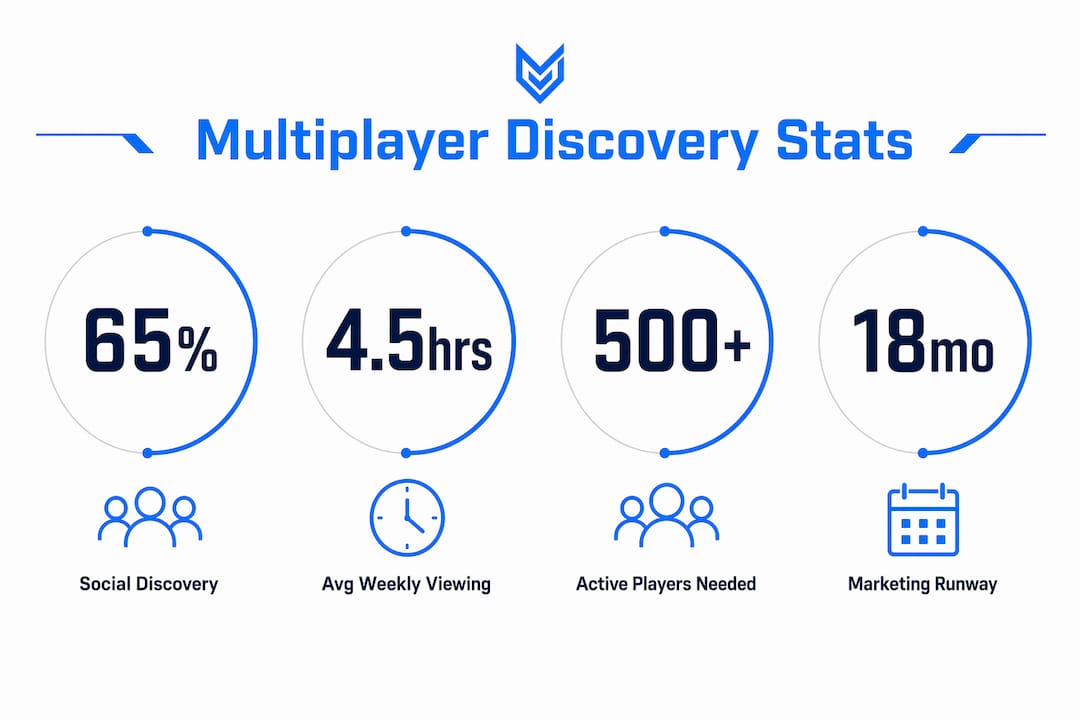
Matchmaking quality is directly tied to concurrent player counts. A game with 500 active players at peak hours cannot offer the same matchmaking experience as one with 50,000, regardless of how well the underlying system is designed. Discovery is what moves a game from the first number to the second.

Session frequency follows the same logic. Players return more often when their friends are already in a game, and friends join when they have seen the game somewhere. Social rituals — in-game events, streaming clips, shared memes — compound this effect. Personalised recommendations from trusted curators or friends are especially effective at converting passive interest into an actual session, because they cut through the paralysis of choice that a catalogue of thousands of titles creates.
Pro Tip: Community organisers can seed social momentum by sharing short clips of a session to Discord or TikTok immediately after playing to create better FiveM loading screen inspiration. Even a small initial audience creates the social proof that draws the next wave of players in.Why great reviews alone won't save a multiplayer game
High review scores do not automatically produce sales or active player bases in an overcrowded market. The evidence is stark: over 15,000 Steam games carry review scores of 80% or above and have more than 1,000 players, yet many still fail to recoup development costs. Quality is necessary but nowhere near sufficient.
> "Some of the best games I've ever played had fewer than 100 reviews on Steam. Not because they weren't good. Because nobody could find them." — Mr. Phil Games, The Game Discovery Crisis Nobody's Talking About
For multiplayer titles, the consequences of poor discoverability are especially severe. A game with excellent design but low concurrent players cannot deliver the experience it promises. Matchmade sessions stall, communities never form, and the game enters a death spiral: low population discourages new players, which further reduces population. Discovery is what breaks that cycle before it starts.
How developers design games to be discovered
Discovery is now a design pillar, not an afterthought. Studios increasingly design for marketing by building social triggers and streamability into the game itself, treating discoverability as a feature alongside gameplay.
Concrete tactics studios use in 2026:
- Shareable moments and clips: built-in highlight reels, funny physics, or dramatic finishes that players want to post on TikTok or YouTube.
- Referral mechanics: in-game invite flows, friend-list prompts, and "bring a friend" bonuses that turn existing players into recruiters.
- Cross-play support: removing platform barriers so a single viral moment can convert players across PC, console, and mobile simultaneously.
- Update cadence: regular content drops that give creators fresh material and keep the game appearing in algorithmic feeds.
- Optimised storefront capsules: capsule art, accurate tags, and a high click-through rate all feed the Steam Discovery Queue, which functions like a personalised "for you" feed and rewards games that earn external social momentum first.
- Creator outreach: building genuine relationships with creators in the game's genre months before launch, not days before.
What your group can do to find the right games
Players and communities can proactively seed discovery through curation, shared watchlists, voting, and targeted sharing. You do not have to wait for an algorithm to surface the right game.
Here is a practical sequence for a group organiser:
1. Plan: Agree on what your group actually wants — session length, platform mix, genre, and how competitive you want to be.
2. Curate: Build a shortlist using curated discovery boards, guest curators on Steam, or community lists on Discord. Trusted recommendations beat algorithmic browse every time for niche preferences.
3. Check compatibility: Run a crossplay compatibility check before anyone buys. Mixed-platform groups waste hours on games that turn out to be platform-locked.
4. Vote: Use a voting tool so everyone has equal input. Pickthe's swiping mechanic lets your group swipe through options and surfaces the game with the most genuine consensus, cutting a process that normally takes an hour down to minutes.
5. Share: Post a clip or screenshot from your first session to Discord or social media. That single share is often enough to pull in the next player.
6. Sustain: Schedule sessions in advance and rotate who picks the game. Consistent scheduling is what turns a one-off session into a regular ritual.
For groups split across platforms, finding games everyone can play together is the first practical hurdle. Pickthe's database of many titles with cross-platform filters makes that check fast and reliable.
Platform-locked discovery and why it holds multiplayer back
Storefronts are optimised for conversion, not unbiased discovery. Steam recommends Steam games. The PlayStation Store recommends PlayStation games. No storefront will ever point you toward a title on a competing platform, even if that title is a better fit for your taste. As one former Valve developer noted publicly, game discovery on Steam is "broken" — and that assessment came from someone who helped build its discovery features.
This platform-locked structure creates a structural gap that platform-agnostic solutions are beginning to fill:
- Subscription launch boosts: Launching on Xbox Game Pass can drive cross-platform visibility and increase wishlists on other storefronts, creating momentum rather than simple cannibalisation.
- Third-party discovery layers: Tools that sit above individual storefronts and filter by cross-platform compatibility, group preferences, or play style rather than by what a single platform sells.
- Curated events and creator programmes: Publisher-run showcases and creator relationship programmes that surface niche titles to the right audiences regardless of platform.
The role of console discovery is evolving quickly, but the structural incentive problem remains. Until storefronts have a reason to recommend games they do not sell, the gap for platform-agnostic discovery tools stays wide open.
Key takeaways
Game discovery is the single most important factor determining whether a multiplayer game builds the player population it needs to deliver on its promise.
| Point | Details |
|---|---|
| Discovery drives multiplayer health | Without a critical mass of players, matchmaking, session frequency, and social rituals all suffer. |
| Creators dominate discovery | Creator-driven channels account for ~24% of how players find new games, more than twice the share of digital storefronts. |
| Quality needs visibility to convert | Over 15,000 Steam games with 80%+ review scores still struggle commercially without effective discovery. |
| Developers can design for discoverability | Shareable moments, referral mechanics, cross-play, and optimised storefront capsules all increase organic reach. |
| Pickthe helps groups act immediately | Pickthe's 6,000+ game database, crossplay filters, and voting tools reduce group selection from hours to minutes. |
The case for taking discovery seriously
The conventional wisdom is that a great game will find its audience eventually. It won't. Not reliably, and not fast enough for a multiplayer title that needs concurrent players on day one to deliver its core experience. The discovery problem is structural: storefronts are built to sell, not to match. Algorithms reward what is already popular. And the volume of new releases grows every year, which means the signal-to-noise ratio keeps getting worse.
What actually works is treating discovery as part of the game itself, not something you bolt on after launch. That means building communities early, designing for shareability, and giving players tools to find each other across platforms. For groups, it means being deliberate about how you select games rather than defaulting to whatever is trending on the front page of a storefront.
Pickthe was built precisely because group discovery was a persistent barrier to actually playing together. The platform's multiplayer game finder approach, combining a large cross-platform database with real-time voting and Discord integration, reflects a straightforward belief: the right game for your group exists, and finding it should take minutes, not an evening of arguing in a group chat.
Find your group's next game with Pickthe
Picking a multiplayer game your whole group can actually play together is harder than it should be, especially when everyone is on a different platform. Pickthe cuts straight through that problem.

With over 6,000 games in its database, real-time voting, a veto system, and Discord integration, Pickthe lets your group swipe through options and land on a game everyone genuinely wants to play, in a few minutes rather than an hour. Cross-platform filters mean you will never waste time on a title half the group cannot access.
Browse party multiplayer games for social-first nights, check PC multiplayer options for your setup, or run a crossplay compatibility check to see exactly what your mixed-platform group can play together. Head to PickThe.Games and start your first board now.
Useful sources
- The death and reincarnation of game discoverability — GamesIndustry.biz
- No, game discovery actually is broken — TotallyHuman Media
- Steam Discovery Queue algorithm explained — Steam Page Analyzer
- Xbox Game Pass discovery boost drives cross-platform sales — OverCentral
- Why game discovery is vital — Game Developer
- The six-part cure for poor game discoverability — Game Dev Newsletter
- The game discovery crisis nobody's talking about — Mr. Phil Games