Make Everyone Show Up: Cross Platform Game Votes for Groups No Signups
Make Everyone Show Up: Cross Platform Game Votes for Groups No Signups

The fastest way to run a schedule game vote is a single shared link that collects availability and a quick game preference, no sign-up required. Most groups land on a date and title within 2 to 20 minutes. Pair that link with three must-haves: no account creation, a crossplay check so the winning game actually runs on everyone's platform, and a clear veto or tie-breaking rule agreed before votes open. A purpose-built board like PickThe.Games handles all three in one place.
*> TL;DR:
>
> - Using a single shared link for availability or quick votes usually results in a decision within 5 to 20 minutes, depending on group size and method.
> - Real-time swipe or vote boards are the fastest for game selection, often taking under five minutes once everyone is ready.
> - Clear veto rules like soft vetoes prevent single objections from blocking the entire vote, with options for tie-break procedures already decided.
> - Third-party voting tools that do not require account creation minimize data collection risks and are suitable for casual or streamer-led groups.
> - Sending links when everyone is online, keeping options limited, and following up with a confirmation message dramatically increase honest turnout and commitment.
*Table of Contents
- Three quick ways to run a schedule game vote
- Running the vote inside Discord or on stream
- Copyable rules: veto, quorum, and what happens with a tie
- How PickThe.Games handles the whole process
- Is it safe to run a vote through a third-party platform?
- Getting honest turnout, not just fast turnout
- Speed or consensus: which should your group prioritise?
- Start your next vote in minutes, not group chats
- Sources
- FAQ
Three quick ways to run a schedule game vote
You've got options here, and the right one depends on what's actually blocking your group: a date, or a game.
Method A: the availability link. Set a date range (two to three weeks works best, according to game-night planning guidance from WhosFreeWhen, since wider windows just create decision paralysis). Share one link, ask for a name and a few toggles against open slots, and let the overlap sort itself out. This is the right call when the game is already agreed and you just need a night that works. Method B: the swipe or vote board. Load a shortlist of games and let everyone swipe or vote in real time. Boards like this settle the "what are we even playing" argument fast, because every player gets equal input rather than whoever shouts loudest in chat. Use this when the date's locked but the game isn't.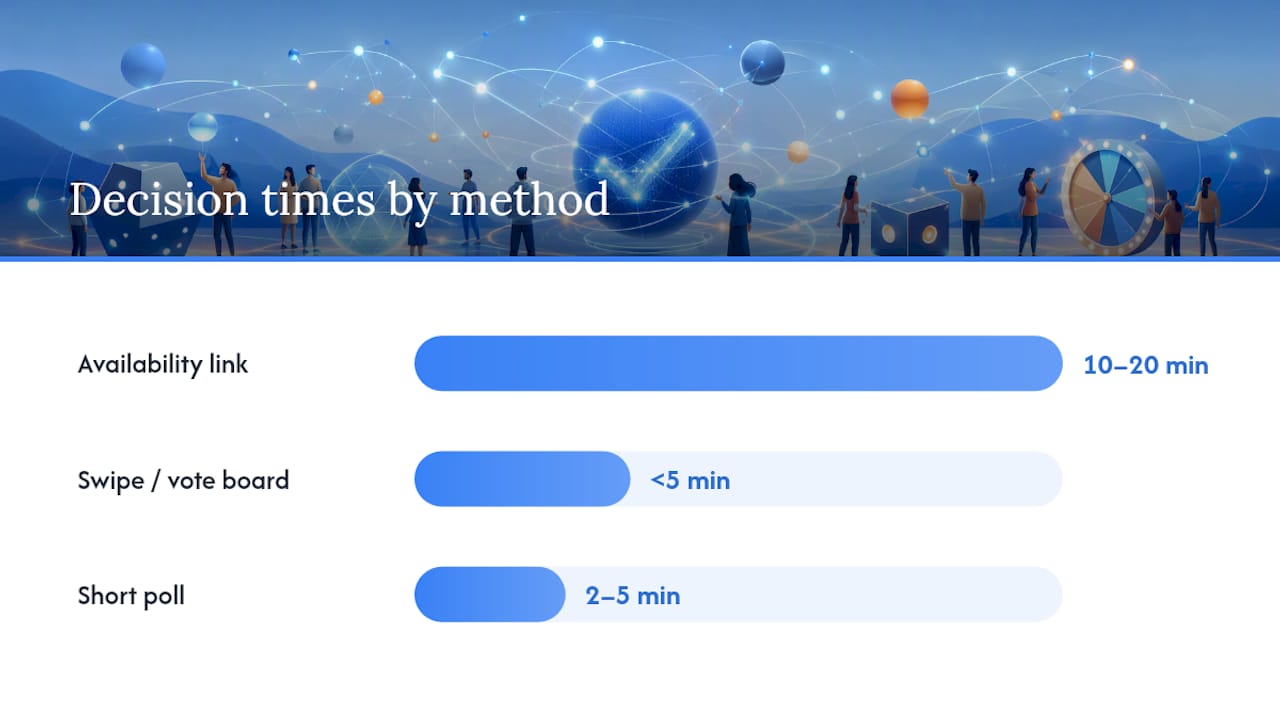 Method C: the short poll. When you're down to two or three options for either time or title, a tight poll with limited choices closes the loop quickest. It's not built for open-ended brainstorming. It's built for a final call.
Here's roughly how long each takes to reach a decision:
1. Availability link — 10 to 20 minutes for most of a group to respond, longer for larger or slower-moving servers.
2. Swipe or vote board — often under 5 minutes once everyone's in the room or channel.
3. Short poll — 2 to 5 minutes when options are already narrowed.
Concrete asks beat vague ones every time. Event-planning research from Buddies found that proposals naming an actual activity and time, with one-tap sign-up, get far better responses than an open "anyone free this week?" message dropped into chat. Setting a minimum-attendee threshold on the invite also nudges people to actually confirm rather than leave you hanging. If you're choosing a game rather than a date, a video game night picker built for scheduled votes saves you from cobbling one together in a shared document.
Running the vote inside Discord or on stream
Discord servers and stream audiences need slightly different handling than a five-person group chat, mostly because of scale and moderation.
For Discord, the practical checklist looks like this:
- Create a Discord event or post the vote link directly in an announcement channel.
- Use a bot or reactions to capture votes, then pin the results so nobody has to scroll back through chat.
- Assign one event owner and a backup moderator in case the first is offline when it matters.
- Prepare a rules post and a dedicated check-in channel before you open voting, not after.
Discord event checklists consistently recommend this owner-plus-backup structure alongside a clear reminder cadence, because tournament and community night guides show turnout drops sharply when reminders are left to chance.
For streamers, share a public vote link your audience can hit without leaving the stream, and use a streamer mode with an OBS leaderboard if you want the results visible on screen. Moderators should watch chat for duplicate votes, particularly during a spike right after you call for votes on stream. A pinned schedule channel and active moderation cut down on the confusion that otherwise clutters live votes, a point streaming setup guidance makes repeatedly for gaming streamers specifically.
A sensible reminder schedule: announce the vote, follow up 24 hours before the session, ping again an hour before, then open a short check-in window right at start time.
Pro Tip: Pin the vote link and the rules post together in one message. Splitting them across two channels is the single most common reason half your server never sees the poll.Copyable rules: veto, quorum, and what happens with a tie
A vote without ground rules just moves the argument to after the results come in. Set these once and reuse them every time.
Veto templates, pick one:1. Soft veto — each player gets one veto per vote, no justification needed, capped at one so nobody blocks everything.
2. Hard veto — only the group owner or host can veto, used sparingly for genuinely unplayable picks
3. Emergency veto — reserved for compatibility problems discovered after voting, such as a platform mismatch nobody caught beforehand.
Most casual groups do best defaulting to one soft veto per person, per vote. It's fair, it's fast, and it stops any single game from steam rolling a genuine objection.
Below that threshold, the vote stands but the session doesn't get locked in.
Tie-breaking: three reasonable options are an instant run-off between the tied titles, a host tie-break as a last resort, or a quick revote limited strictly to the games that tied. Pick one in advance so a 2-2 split doesn't spark a fresh debate. No-shows: ask for attendance confirmation 24 hours before the session. If key players drop out after that, the host can reassign the slot or reschedule rather than limping through with a half-empty lobby. For more copyable veto language, this veto rules breakdown has four ready-made templates worth adapting.How PickThe.Games handles the whole process
PickThe.Games builds each of these methods into one workflow rather than making you stitch together a poll, a spreadsheet, and a group chat thread.
- Real-time voting boards let a group swipe through shortlisted titles together, with results visible as votes land.
- The swipe mechanic gives every player equal input, which the platform's own breakdown of multiplayer game voting frames as the fix for the usual "loudest voice wins" problem.
- A built-in veto system lets you apply the soft or hard veto rules above without a separate agreement document.
- Crossplay compatibility checks confirm the winning game actually runs across everyone's platform before you commit an evening to it.
- Discord integration and streamer mode bring the board straight into a server or onto a stream overlay, including 60-second swipe votes for Remote Play Together sessions.
Three concrete uses map straight onto the methods above: a "pick a game fast" board for Method B, a "find a date" link for Method A, and a streamer-mode vote where the audience decides what's next.
Is it safe to run a vote through a third-party platform?
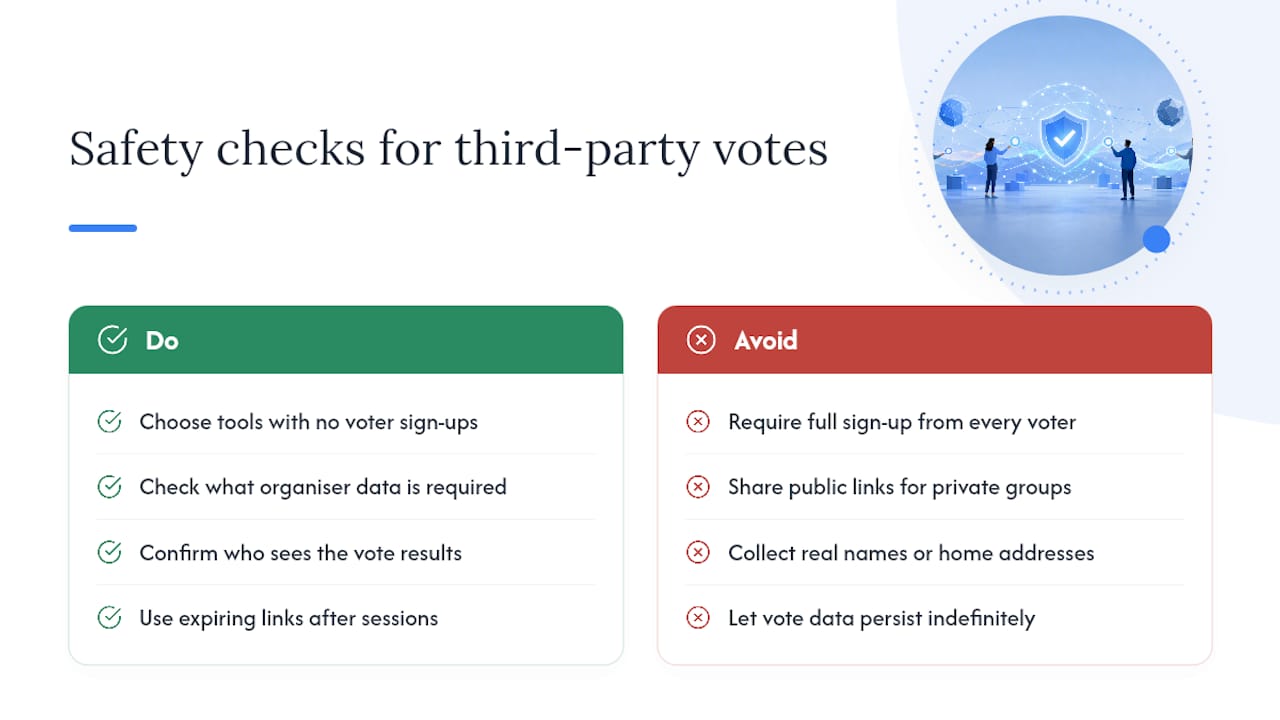
Third-party voting tools are generally low-risk, provided you check what they actually ask for before sharing a link with your group. The safest tools need no account creation from voters, which limits what personal data gets collected in the first place.
Watch for three things before you commit to a platform: what data it asks the organiser (not just voters) to provide, whether vote results are visible to the whole group or just the host, and how long the vote data sticks around after the session's confirmed. A tool that needs a full sign-up from every voter just to register a preference is collecting more than it needs for the job.
For casual groups, a link that expires after the session and never asks for anything beyond a name and a vote is the lower-friction, lower-risk choice. Streamers should be a little more careful, since a public vote link shared on stream is, by definition, visible to strangers, not just your regulars. Keep sensitive scheduling details (real names, home addresses for in-person sessions) out of any public-facing vote, and use a private link where the group is genuinely private. None of this is exotic advice. It's the same due diligence you'd apply to any form that asks strangers to type something into a box.
Getting honest turnout, not just fast turnout
A fast vote is worthless if half the group didn't actually see it or didn't vote honestly because a friend was hovering over their shoulder.
Timing matters more than most organisers assume. Send the vote when your group is actually online, not at 9am on a Tuesday for a server that's active from 8pm. Keep the choice list short. Buddies' research on group planning found that concrete, narrow proposals get answered far more reliably than open-ended ones, and the same logic applies to a shortlist of three games rather than fifteen.
Anonymity helps with honesty. If a vote is visible in real time to the whole channel, some players will vote to match a friend rather than their actual preference. A board that reveals results only once voting closes avoids that pile-on effect entirely.
Finally, follow up. A quick "confirmed for Saturday, 7pm, see you there" message after the vote closes does more for turnout than any reminder before it, because it turns an abstract poll result into a concrete plan people feel obliged to keep.
Speed or consensus: which should your group prioritise?
Casual friend groups and stream audiences should favour speed. Get the best overlap fast, agree a veto rule up front, and start playing. Competitive or formal groups, where a wrong pick wastes real practice time, do better with higher consensus: enforce quorum, confirm attendance, and don't skip the check-in window. As a general default, speed with one clear veto rule beats endless consensus-seeking for most groups most of the time.
> — PickThe
Start your next vote in minutes, not group chats
This platform offers an alternative to cobbling together multiple tools for game voting. Its boards, veto system, and Discord integration are available without ads or paid tiers, providing the same tools regardless of group size.
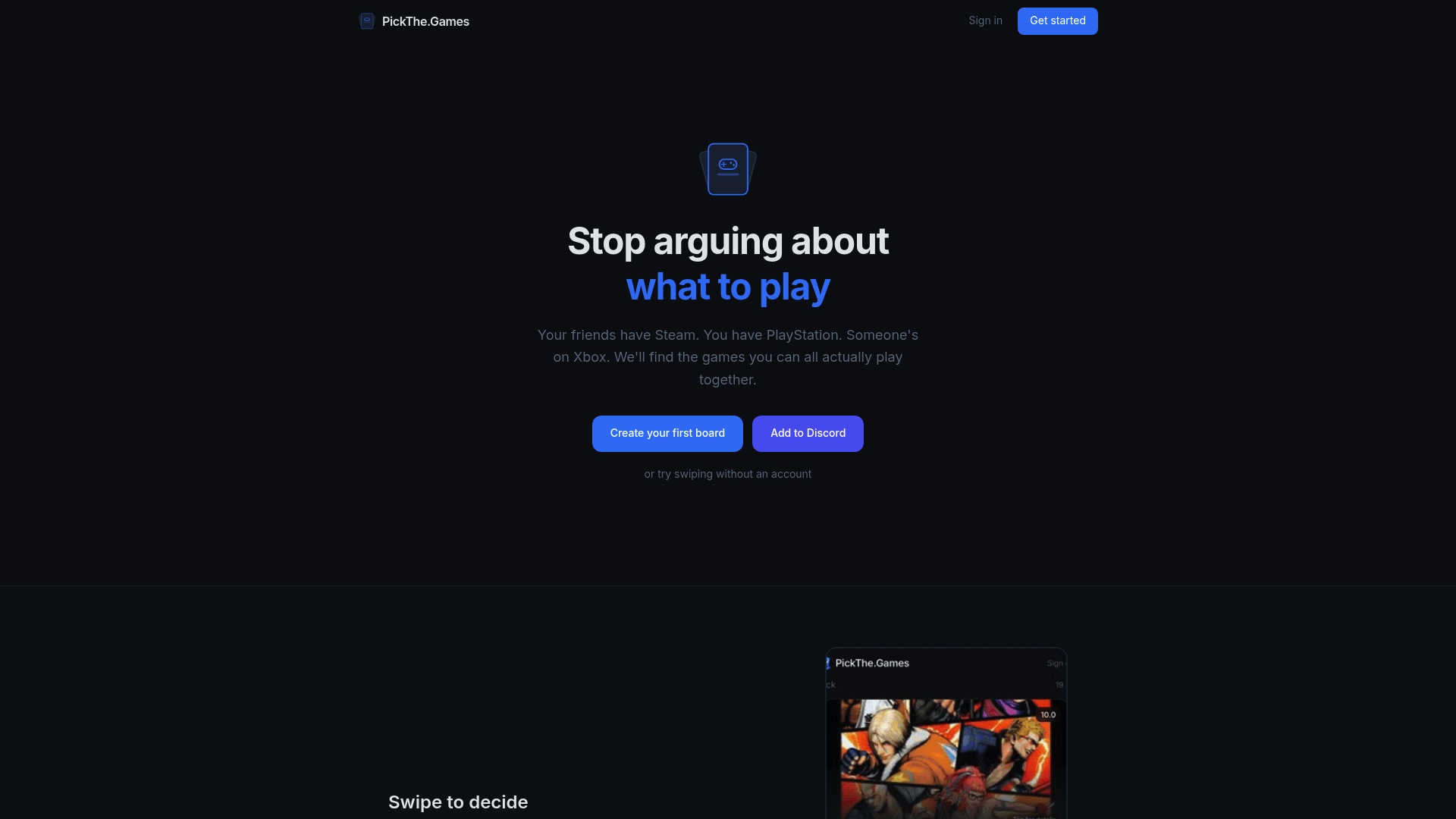
If your group needs a date, start with the game voting app and its built-in RSVP flow. If the sticking point is which game actually runs across everyone's console or PC, run your player list through the crossplay compatibility checker before you open the vote, not after someone's already downloaded a 40GB install. For servers that want the board embedded directly into their community, Pickthe takes a few minutes and puts the vote link where your players already are.
Sources
- How to Plan a Game Night with Friends (2026) | WhosFreeWhen?
- Stop planning in group chat — how to get your friends together | Buddies
FAQ
How long does a schedule game vote usually take?
A swipe or vote board can produce a decision in under 5 minutes once everyone's present. An availability link for a full session date typically takes 10 to 20 minutes to gather enough responses, based on game-night planning guidance.
What's the best way to vote for a game time across different time zones?
Use a single shared link showing a date range in each person's local time rather than asking everyone to convert manually. A 2 to 3 week window, as recommended by WhosFreeWhen, gives enough spread to find a genuine overlap without dragging the decision out.
Do I need everyone to sign up to vote?
No. The best schedule game vote tools, including PickThe.Games' voting boards, let people vote via a shared link with no account required. Sign-up friction is one of the biggest reasons group votes stall.
What happens if a vote ends in a tie?
Agree the method beforehand: an instant run-off between tied titles, a host tie-break, or a quick revote limited to just the tied options. Deciding this in advance stops a 2-2 split from reopening the whole debate.
Is my data safe on a third-party voting platform?
Check whether the platform requires voter sign-up, how visible results are, and whether vote data expires after the session. Tools that need only a name and a vote, with no account creation, collect the least data and carry the lowest risk for casual group use.