3–6 Games, 24–48 Hour Vote: Weekly Game Night Poll for Hosts
3–6 Games, 24–48 Hour Vote: Weekly Game Night Poll for Hosts

Run a short recurring poll with three to six candidate games, a 24 to 48 hour deadline and a one veto rule, and your group will know what to play in minutes instead of arguing for half the evening. PickThe.Games is one ready tool built around exactly this flow, letting everyone swipe or vote in real time and checking crossplay so nobody gets left out. Once you set the pattern, the same weekly poll keeps working session after session.
*> TL;DR:
>
> - Using a short poll with three to six game options, a 24 to 48 hour deadline, and a veto rule quickly guides groups to consensus without lengthy debates.
> - Different voting methods suit various group sizes and preferences, with chat polls for speed, ranked voting for fairness, and scheduling tools for availability conflicts.
> - Building a recurring workflow with clear shortlists, reminders, and rule sets helps streamline weekly game night decisions and reduces discussion over time.
> - Set ground rules for tie-breakers, vetoes, and handling no-shows to prevent conflicts and maintain fairness during the voting process.
> - PickThe.Games offers live swipe voting, built-in vetoes, crossplay verification, and Discord integration to simplify the poll and ensure everyone’s setup aligns.
*Table of Contents
- Which poll method actually fits your group?
- A repeatable weekly poll workflow you can run every session
- Rules and tie-breakers that stop polls turning into arguments
- A copy-paste poll template and gateway games to stock it with
- Why PickThe.Games helps: features built around the weekly poll
- What changes after your first few weekly polls
- Try PickThe.Games for your next weekly pick
- Sources
- FAQ
Which poll method actually fits your group?
Not every group needs the same setup. The right method depends on how many people you're wrangling, what app you already use, and how much friction you can tolerate before people stop bothering to vote.
- Single-choice chat polls built into apps like Discord or WhatsApp are the fastest option: post three or four games, everyone taps once, done in under a minute.
- Ranked-choice or score voting works better when the group has genuinely different tastes, since it avoids a game winning with a small plurality that half the table actually dislikes.
- Swipe or real-time voting suits mixed-platform groups well, since everyone can vote from their own device without signing into a shared account.
- Scheduling-first tools that combine "when are you free" with "what do you want to play" solve two problems at once, which matters when half the trouble is just finding a night everyone can make.
The trade-off is always speed against fairness against sign-in friction. A single chat poll takes seconds to set up but can produce a winner nobody's excited about. Ranked voting produces a fairer result but takes longer to tally. Scheduling apps like WhosFreeWhen handle availability well but usually treat game choice as an afterthought. Pick the method that matches how much your group actually cares about the outcome versus how quickly they want an answer.
A repeatable weekly poll workflow you can run every session
The workflow only needs to be built once. After that, it's copy, paste, close, play.
1. Assemble your shortlist of three to six games a day or two before you plan to post the poll, so nobody's scrambling to remember titles.
2. Post the poll with a clear opening line, the games listed as options, and the planned session date stated up front.
3. Set a 24 to 48 hour deadline and say it explicitly, so latecomers know the window has closed rather than assuming they can still vote.
4. Decide the voting mechanic in advance, whether that's one vote each, two votes each, or a ranked list, and state your veto rule alongside it.
5. Send one reminder roughly halfway through the window, then close the poll on time and announce the winner immediately.
6. Assign post-vote jobs: who brings the box or controllers, who explains the rules, and whether anyone needs to download anything before the session starts.
Pro Tip: Pin the poll and the winning result in the same chat thread each week, so newcomers can scroll up and see exactly how the group runs things.A short, recurring poll like this reduces discussion overhead over time, according to the Game Night Guide, because the group gets used to trading off preferences rather than relitigating them every week.
Rules and tie-breakers that stop polls turning into arguments
A poll without ground rules just moves the argument from "what do we play" to "was that vote fair". Set the rules once, post them somewhere visible, and stop having the same debate every week.
- Cap the shortlist at three to six games, give each person one vote and one veto, and let a simple majority win.
- Break ties with the lowest total playtime, a quick randomiser, or a short re-vote limited to just the top two options.
- Handle no-shows by offering to swap to the runner-up or rescheduling rather than forcing the winning game on a table that's missing a key player.
- Choose ranked voting when tastes are genuinely split, and stick with single choice when speed matters more than nuance.
- Shape the evening with a short opener, a proper main event, and a quick closer, rather than one long game that eats the whole night.
Host guides recommend capping strategy games at six to eight players and switching to party games for anything bigger, which is worth building into your candidate list before you even open the poll, according to the Game Night Guide.
A copy-paste poll template and gateway games to stock it with
Here's a template you can drop straight into a group chat or a polling tool:
- Title: Game night poll, week of [date]
- Options: three to six named games, no more
- Deadline: "Voting closes [day/time], 24 to 48 hours from now"
- Veto note: "One veto each. If your veto knocks out the leader, we go to the next-highest pick."
- Session line: "We're playing [day/time] at [location]"
For mixed-experience groups, gateway games earn their spot because they're quick to teach and forgiving of mistakes. Cooperative titles work particularly well for newcomers since they remove the winner-loser tension that can sour a first session, an approach echoed by Mixily's game night guide.
- 4 to 6 players: lean into strategy or mid-weight games, since smaller tables handle longer rule explanations comfortably.
- 7 to 8 players: party games or team-based formats keep everyone involved without long downtime between turns.
- 9 or more players: split into two simultaneous games rather than forcing one title to stretch across a crowd.
For a typical two to three hour evening, plan one main event and one or two shorter games either side of it rather than a single sprawling session.
Why PickThe.Games helps: features built around the weekly poll
PickThe.Games maps closely onto this workflow. Its swipe voting lets everyone weigh in from whatever device they're on, the veto system is built in rather than something you have to enforce manually, and the Discord bot means the poll lives right inside the chat your group already uses. A crossplay checker confirms the winning game actually works across everyone's platforms before anyone downloads anything, and results update live so there's no manual tallying.
> Everyone swipes, the group sees the result instantly, and nobody has to referee an argument about who voted for what.
The platform lists thousands of games and runs with no paywalled features, so a group can set up a board and start voting the same evening they decide to try it.
What changes after your first few weekly polls

Most hosts adjust the format within two or three sessions. You'll probably shorten the candidate list, tighten the deadline, or switch from single choice to ranked voting once you see how your group actually behaves.
As host, you can override the poll result occasionally, but say why out loud, whether that's a missing player or a game that needs more setup time than the night allows. Keep a short note of what worked so the rotation improves rather than resetting every week.
> — PickThe
Try PickThe.Games for your next weekly pick
PickThe.Games puts the rules from this guide into one place: a shortlist your group swipes through, a built-in veto so nobody gets stuck with a game they hate, and a crossplay checker that confirms everyone's setup can actually run the winner. The Discord integration means the poll happens where your group already talks, and there's no paywall standing between you and any of it.
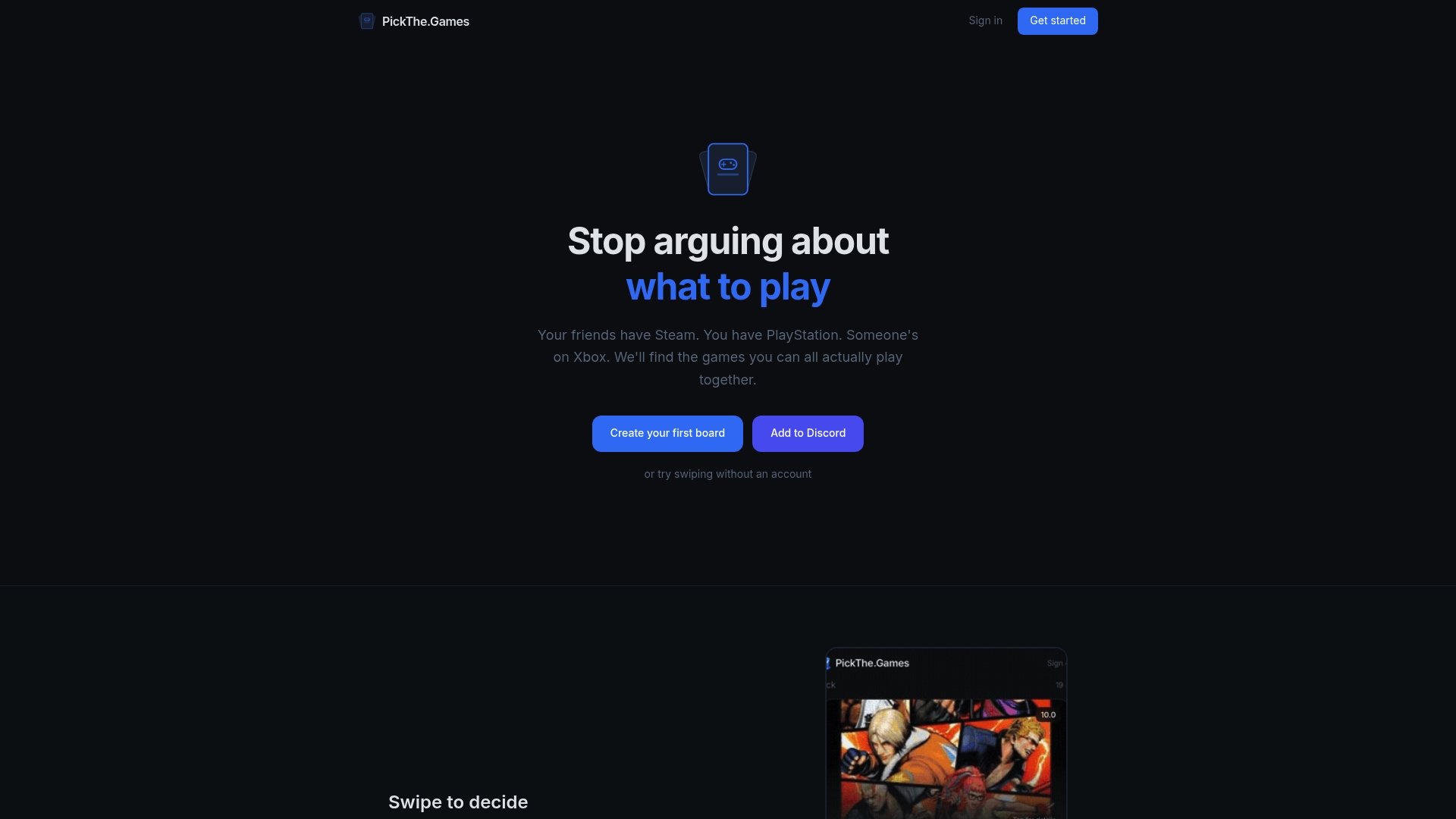
If your group mixes consoles and PC players, start with the crossplay compatibility checker to confirm this week's shortlist will actually work for everyone, then run your first swipe vote with the game night picker.
Sources
For more on structuring the evening itself, the Game Night Guide covers opener-to-closer pacing in detail, and Mixily's game night ideas has more suggestions for matching games to group dynamics.
FAQ
What are some good game ideas for a game night?
Cooperative and party games work best for mixed-experience groups since they lower the pressure on newer players, while small tables can handle longer strategy games comfortably. Match the game type to your group's size and social goal rather than picking whatever's newest.
What's the number one game right now?
There's no single universally agreed pick, since preference shifts by platform, group size and genre. Running a weekly poll among your own shortlist is a more reliable way to find what your specific group actually wants to play.
What is the 40 second rule of gaming?
This isn't a standard or widely documented gaming rule, so definitions vary depending on where you've heard it. If you're thinking of a specific house rule your group uses, it's worth defining it explicitly in your poll notes rather than assuming everyone knows it.
What are some fun questions to ask at game night?
Simple icebreakers work well before the main event, things like favourite childhood game or most embarrassing loss. Keep them short so they fit into the opener slot without eating into main event time.
How long should a weekly game night poll stay open?
A window of 24 to 48 hours balances giving people time to vote against keeping the decision fresh and timely. Longer windows tend to lose momentum and reduce how many people actually respond before the deadline.