The six game night rules that stop every group falling apart
The six game night rules that stop every group falling apart
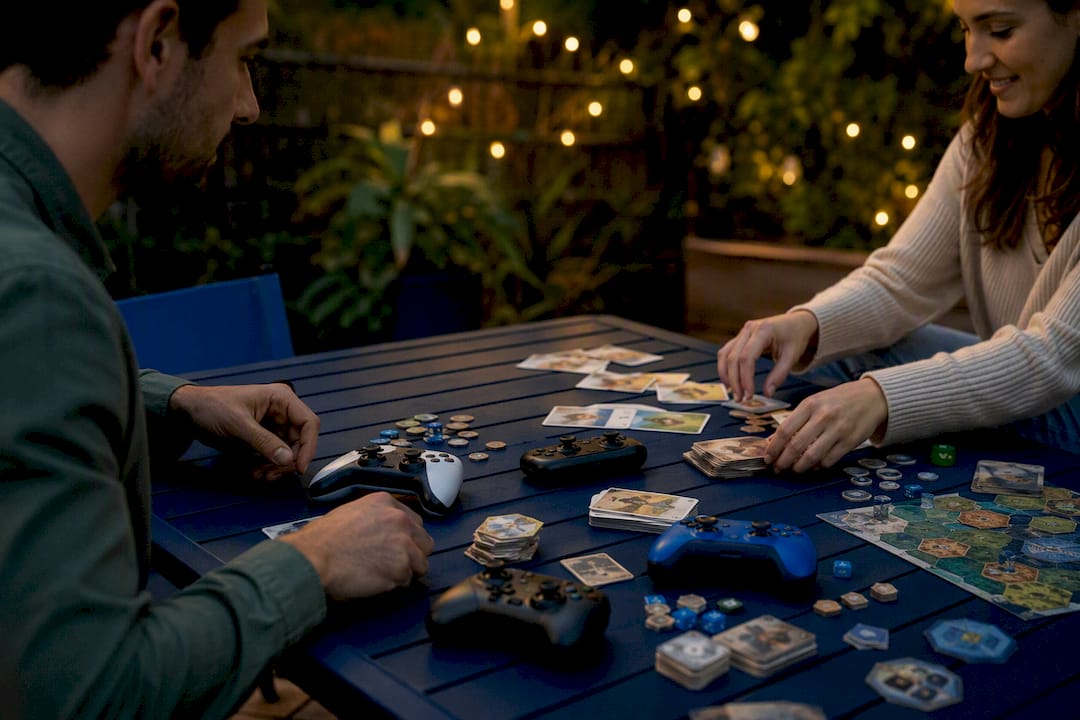
These are the six rules that make almost every game night run smoothly: start on time, keep phones off the table, teach rules in under two minutes, pick games that fit the whole group, agree snack boundaries before you open a box, and settle disputes with a quick vote rather than a debate.
- Timeliness – A short grace window is fine; beyond that, start without stragglers so the group doesn't lose momentum.
- Phones away – Even face-up on the table, a buzzing phone breaks concentration and slows turns.
- Teach in under two minutes – Explain the goal, run one demo turn, skip the edge cases until they actually happen.
- Play to the group – A gateway game for six mixed-experience players beats a 90-minute strategy title nobody's tried.
- Set snack boundaries early – Finger food only, kept off the table where cards and dice live.
- Settle disputes fast – Check the rulebook, then vote. Nobody wins an argument that eats 20 minutes of play time.
A tool like Pickthe can reduce the "what should we even play?" argument to a two-minute swipe session before anyone's even sat down.
Key Takeaways
A smooth game night depends on agreeing timing, phone rules, and a fast game-selection method before anyone sits down to play.
| Point | Details |
| --- | --- |
| Six core rules | Timeliness, phones away, quick rule teach, group-fit games, snack boundaries, and fast dispute resolution. |
| Teach in under two minutes | Explain the goal, run one demo turn, skip edge cases until they come up. |
| Use a dispute hierarchy | Check the rulebook, do a quick lookup, vote, then let the host make the final call. |
| Plan three games | A warm-up, a main event, and a social closer keep energy balanced through the night. |
| Pick games fast | A tool like PickThe.Games turns swipe voting and one veto per person into a locked lineup in minutes. |
Table of Contents
- Full game night etiquette checklist for hosts and guests
- Host preparation: space, timing, and a three-game workflow
- Guest responsibilities: how to be the player every host wants back
- Resolving disputes and curbing over-competitiveness
- Snacks, drinks, and keeping components in good shape
- Picking games fast without leaving anyone out
- What to wear and how to stay comfortable through a long session
- Clean-up responsibilities and how to close out the night properly
- Managing expectations and keeping competitiveness in check
- Phone and device etiquette that actually gets followed
- Sources
Full game night etiquette checklist for hosts and guests
Most game night friction doesn't come from bad games. It comes from small behavioural mismatches nobody agreed on beforehand. A clear set of board game rules matters less than everyone agreeing on how to behave around the table.
Do this:- Arrive on time and confirm your RSVP the day before, not the hour before.
- Offer to help set up chairs, snacks, or the table itself.
- Explain the win condition before anyone touches a card.
- Run one demo turn instead of narrating the entire rulebook.
- Keep your turn moving; think out loud if you need more time.
- Draw quieter players into the game with a direct, easy question.
- Help clear plates and put components away before you leave.
- Don't leave your phone face-up mid-table, buzzing through someone's turn.
- Don't eat anything sticky or greasy near cards, tiles, or a shared board.
- Don't relitigate a rule for ten minutes when a thirty-second lookup settles it.
- Don't push someone into a game they've clearly said no to twice.
Good game night etiquette leans on a handful of ready phrases that de-escalate without anyone losing face. "Let's vote and move on" ends a stalled rules debate faster than any rulebook citation. "Can we try one demo round first?" gives a hesitant player an easy way in without committing to a full match.
Pro Tip: Post three or four house rules somewhere visible for recurring game nights. Groups running monthly sessions report that a short, consistent list keeps the atmosphere steady even as the guest list changes.Host preparation: space, timing, and a three-game workflow
Good hosting is mostly logistics done an hour early. Get the practical stuff sorted before the first guest arrives and the actual playing takes care of itself.
Headcount shapes everything. Four players suit sharper strategy games; eight or more need something that tolerates simultaneous turns and forgives a bit of chaos. Plan your lineup around the group size you've actually confirmed, not the one you hoped for. Setup checklist:1. Clear seating with good lighting over the table.
2. A snack station set apart from where components live.
3. Chargers, a visible bin, and a timer within reach.
4. Printed quick-reference rule cards for anything unfamiliar.
5. Name tags if half the group are strangers to each other.
A three-game lineup works better than one long session: a 15 to 20 minute warm-up, a 30 to 60 minute main event, and a short, social closer. Use a group vote, a veto round, or a rapid tool like Pickthe to lock in that lineup in minutes rather than debating it at the door. Whatever you pick, teach it in under two minutes with one demo turn.
Guest responsibilities: how to be the player every host wants back
Hosting takes effort. Being a good guest takes almost none, but it's the part people skip.
Before you arrive:- RSVP honestly and arrive inside the stated window, not 40 minutes late.
- Bring something: a snack, a game you love, a charger, a bit of patience.
- Flag dietary needs or a hard leave time before the night starts, not halfway through the main game.
- Listen properly during the rule teach and save clarifying questions for genuine gaps.
- Help set up and pack away without waiting to be asked twice.
- Give other players their turn without hovering or offering unsolicited strategy.
If a game genuinely isn't for you, say so early and kindly: "I'll sit this one out and jump in for the next round" keeps the table moving without any awkwardness.
Resolving disputes and curbing over-competitiveness
Rule disagreements are inevitable. What separates a smooth night from a stalled one is having a fixed order of operations everyone accepts in advance.
1. Check the rulebook or box insert first — most disputes are answered in ten seconds flat.
2. Do a quick online lookup if the rulebook is ambiguous; BoardGameGeek's rules wiki holds publisher-approved FAQs for most popular titles.
3. Take a majority vote if the lookup doesn't settle it.
4. Let the host make the final call and move on. Nobody relitigates a tiebreak.
This hierarchy of rulebook, lookup, vote, host tiebreaker is standard advice across most hosting guides, and it works precisely because nobody has to "win" the argument. Soft turn-limits or a visible timer stop one competitive player dragging a decision out. If the friction persists, switch your closer to a cooperative game where the table is working together rather than against each other.
Pro Tip: If a dispute can't be settled in two minutes, table it, finish the round under a temporary ruling, and resolve it properly during the next break. A pending debate should never freeze live play.Snacks, drinks, and keeping components in good shape
Cards, minis, and tiles don't survive greasy fingers or a knocked-over glass. Set the ground rules before the first box opens.
- Finger food only: nothing that needs a fork near the play area.
- Keep snacks on a separate mat or side table, never on the board itself.
- Use lidded or covered cups; a stray elbow shouldn't end anyone's evening.
- Label dishes clearly for allergies, and skip double-dipping in shared bowls.
Keep a small component care kit on hand: napkins, a couple of spare bowls, and sandwich bags for anything that spills. A quick hand wash after crisps or wings before picking up cards again takes ten seconds and saves a set of components.
Picking games fast without leaving anyone out
Choosing a game shouldn't take longer than playing it. A simple swipe-and-vote workflow gets a mixed group to a decision in minutes instead of ten rounds of "I don't mind, what do you want to play?"
- Create a shared board and have everyone swipe or vote on options in real time.
- Let each player veto one game they genuinely don't want to play.
- Take the top three results and slot them into your warm-up, main, and closer.
This is exactly the gap Pickthe was built to close: real-time voting, a one-veto system per person, and a crossplay checker that settles compatibility questions before anyone starts arguing about platforms. For groups spread across Discord, the bot integration lets everyone vote from chat without opening a separate app.
For inclusion, mix complexity levels deliberately. Pair a newcomer with an experienced player for their first round, and hand out a one-page rule card instead of expecting them to remember a verbal explanation. Games that welcome non-gamers tend to have clear win conditions and low setup time, which makes them ideal warm-up picks.
| Point | Details |
| --- | --- |
| Swipe and vote | Real-time voting gets a group from indecision to a locked lineup in minutes. |
| One veto each | A single veto per person filters out games nobody wants without a lengthy debate. |
| Crossplay check | Verifying platform compatibility upfront avoids a mid-setup discovery that half the group can't join. |
What to wear and how to stay comfortable through a long session
Nobody needs a dress code for game night, but comfort has a real effect on how long people stay engaged. A three-hour session in stiff clothes or a cold room ends earlier than it should, and that's on the host as much as the guest.
Lean towards loose, casual clothing you'd wear for a relaxed evening in. Anything that restricts sitting cross-legged or leaning over a low coffee table becomes a distraction by hour two. If your table setup involves floor cushions rather than dining chairs, mention that in the invite so nobody turns up in tight jeans expecting a proper seat.
Temperature matters more than most hosts plan for. A room full of people generates heat fast, so crack a window or set a fan running before guests arrive rather than mid-session once everyone's uncomfortable. Keep a couple of spare layers or a blanket somewhere visible for anyone who runs cold.
Lighting affects comfort too, particularly for games with small text or fine card details. Warm, even lighting over the table beats a single dim lamp in the corner, and it reduces the squinting that makes people want to wrap up early. If you're hosting regularly, a cheap clip lamp aimed at the table is a small investment that pays off every single session.
Comfortable seating with back support outlasts a stool or a floor cushion for anything longer than an hour. If your main game runs 45 minutes or more, make sure at least the players in it have proper chairs.
Clean-up responsibilities and how to close out the night properly
A game night doesn't really end when the last round finishes. It ends when the table's clear and everyone knows they're welcome back.
As host, sort components back into their boxes before guests leave rather than the morning after; loose pieces have a habit of vanishing into sofa cushions overnight. Assign this transparently rather than leaving it unspoken: "Could a couple of you help stack chairs while I sort the board games?" gets a faster response than a hopeful silence.
Guests should default to helping without waiting to be asked. Clearing your own snack plate, folding your own game box back up, and carrying a stack of cups to the kitchen takes thirty seconds and makes you the guest who gets invited back first.
Wrap-up procedure worth adopting:
1. Announce the last game 15 minutes before your stated finish time.
2. Pack away components as each game ends, not in one big rush at the end.
3. Do a quick surface check for stray dice, cards, or crumbs under the table.
4. Confirm the next date or a rough cadence before everyone heads out.
That last step matters more than it seems. A vague "we should do this again sometime" rarely becomes a second night. A specific date, even a loose one, does.
Managing expectations and keeping competitiveness in check
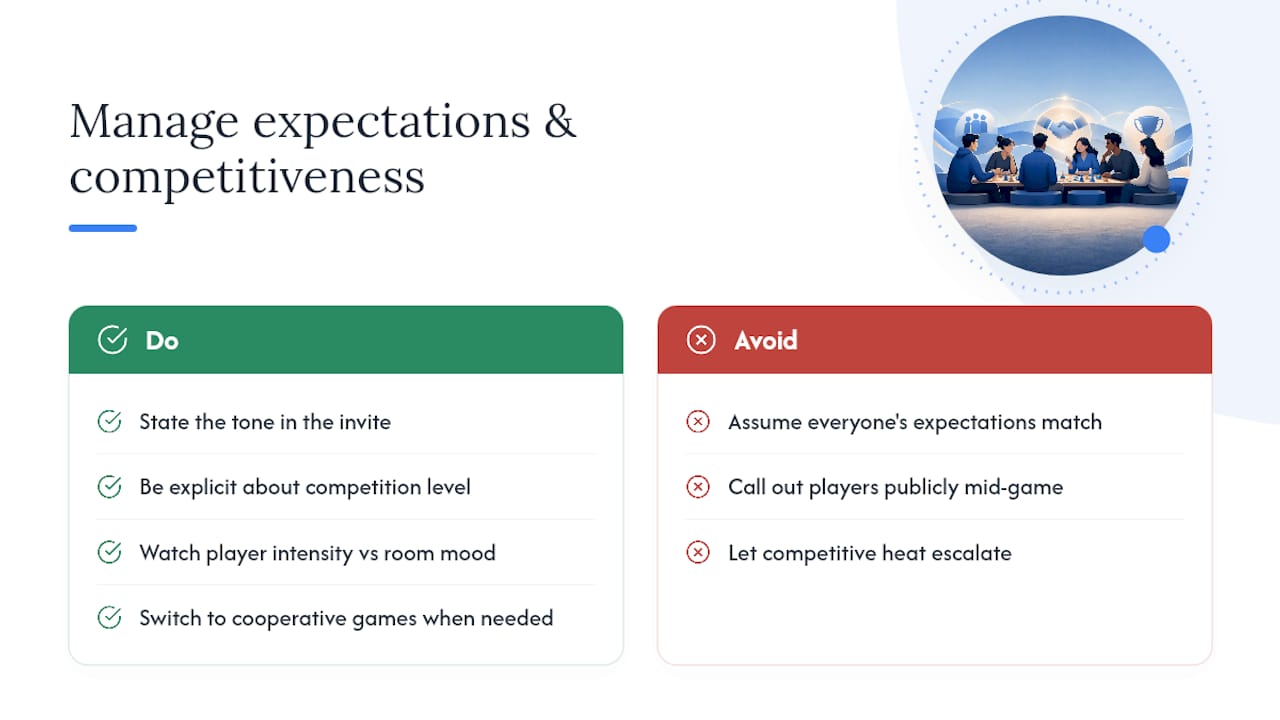
Every group has at least one player who takes winning more seriously than the room's mood calls for. That's not automatically a problem, but it becomes one when nobody's set expectations beforehand.
State the tone in the invite itself. "Casual night, nothing too cutthroat" reads very differently to guests than "bring your A game," and it lets people opt in or out based on what they actually want from the evening. If your group genuinely enjoys sharp competition, say that too, so nobody turns up expecting a relaxed social game and gets blindsided by a ruthless auction round.
During play, watch for the gap between a player's intensity and the room's mood. A light dig at a bad move is normal; a lecture on someone's strategic error mid-game isn't. If tension builds, a host can redirect without confrontation: "Let's keep the trash talk friendly" works better than calling anyone out directly.
Cooperative and team-based formats are worth keeping in your back pocket specifically for this. When one or two players consistently push the competitive temperature too high for the group, switching your closer to something collaborative resets the dynamic without singling anyone out. It also gives newer or less confident players a format where contributing matters more than winning outright.
Phone and device etiquette that actually gets followed
Phones cause more game night friction than almost anything else on this list, mostly because nobody wants to be the one who brings it up.
Set the expectation before the first game starts, not after someone's third interruption. A simple "phones on silent, face-down, please" at the start of the night is easier to enforce than a mid-game request that singles one person out. Some hosts keep a shallow bowl by the door for phones on arrival, which works well for smaller, more focused groups but can feel heavy-handed for a casual, larger night.
Exceptions are reasonable and worth naming upfront: checking on a babysitter, a work emergency, or using a phone as a timer or scorekeeper. The rule isn't "no phones exist," it's "no phones interrupt someone else's turn." If a player genuinely needs to step away for a call, they should do exactly that, away from the table, rather than half-participating with one eye on a screen.
Digital tools are a different category entirely. Using a companion app to check a rule or teach a game while you play speeds up the night rather than distracting from it. The line isn't the device itself, it's whether it's serving the game or pulling attention away from the people at the table.
Host perspective: one habit that removes friction
The best hosts I've watched state their start and end time in the invite, then open with a two-minute vote to lock the lineup. Everyone knows the shape of the night before they've sat down.
Use PickThe.Games to pick games in minutes, not arguments
Once the etiquette's sorted, the last friction point is usually "so, what are we actually playing?" That's the one problem Pickthe was built to solve. Swipe voting lets everyone weigh in at once, a one-veto system filters out games nobody wants, and the crossplay checker settles platform arguments before they start.
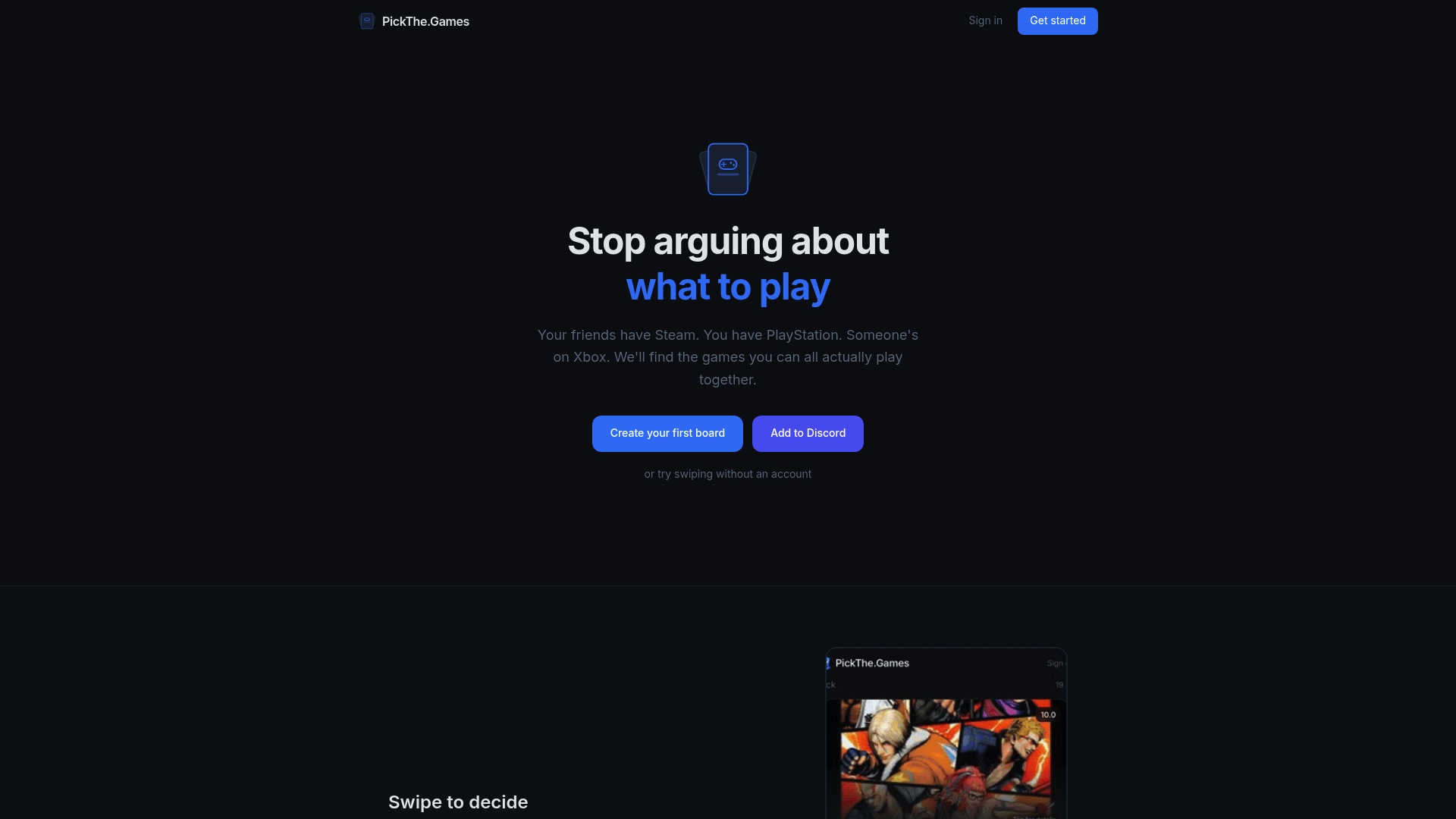
It works well as a pre-invite poll sent out the day before, or as a two-minute warm-up vote once people are actually sat down with drinks in hand. Groups mixing consoles and PC players get the most out of it, since the tool flags compatibility issues before anyone's downloaded anything. There's a Discord bot too, for groups who organise their nights entirely in chat.
If your next session needs a lineup sorted before anyone argues about it, start a board with the game voting app and let the group decide together.
Sources
- Game Night Etiquette: Setting the Right Tone for Fun
- How to Host the Perfect Game Night (Complete Hosting Guide) | WOP
- Game rules — BoardGameGeek wiki
- Dized — board game companion app
Recommended
- How to Build a Gaming Group That Actually Sticks Together | PickThe.Games
- What Should We Play Tonight? How to Decide in 2 Minutes | PickThe.Games
- Game Night Ideas for Groups Who Are Sick of Playing the Same Thing | PickThe.Games
- How to Pick a Game for Game Night (Without the 30-Minute Argument) | PickThe.Games