Quick group game selection method: your 2026 guide
Quick group game selection method: your 2026 guide

A quick group game selection method is a systematic process that helps your group rapidly choose the right multiplayer game for your session, ensuring everyone has fun with minimal delay. Most groups waste 20 to 30 minutes debating what to play before the night even starts. That dead time kills momentum and tests patience. The good news is that a structured shortlisting process, built around group profiling, digital filtering tools, and a prepared game rotation, cuts that delay to just a few minutes. This guide walks your group through every step, from reading the room to pressing play.
What is a quick group game selection method?
A quick group game selection method is the recognised term for any structured approach that reduces the time and friction involved in choosing a multiplayer game. The informal version most groups practise, scrolling through a library and arguing, is the opposite of a method. A proper process has three stages: assess your group's needs, filter your options to a shortlist, and use a fair decision mechanism to make the final call. Each stage removes one layer of indecision, so your group arrives at a choice without anyone feeling steamrolled.
The core insight is simple. Removing subjectivity through a clear rubric on criteria like player count, available time, and theme is significantly more effective at reaching consensus than open debate. That principle comes from structured hiring practice, but it applies directly to game night. When everyone agrees on the criteria upfront, the game almost selects itself.

How do you assess your group's needs before choosing a game?
Before you open any library or app, you need a clear picture of who is in the room and what they actually want tonight. Skipping this step is the single biggest cause of a bad game night.
Start with these five questions:
- How many people are playing? Player count is a hard constraint. A game built for four players cannot accommodate eight without a different title.
- What is the experience spread? A group with two veterans and four newcomers needs a different game than an all-veteran squad. Games rated 1.5–2.5 complexity are ideal for casual or mixed-experience groups, while anything above 3.5 requires serious dedication from everyone at the table.
- How much time do you actually have? Be honest here. If you have two hours, do not pick a game with a four-hour box estimate. Add 25–30% extra time to any box estimate to account for setup, teaching, and rule clarifications.
- What is the mood tonight? Competitive, cooperative, party, or chill. Matching the game's rhythm and style to your group's current mood yields better experiences than simply picking the highest-rated title.
- What platforms or budgets apply? For digital games, crossplay compatibility matters enormously. Budget and technical compatibility must be established before the group meets to avoid last-minute frustrations.
Run through these five points as a group in under two minutes. Write the answers down or type them into a shared chat. You now have a filter profile that makes every subsequent step faster.
Pro Tip: Ask everyone to rate their energy level from one to five before you start. Low energy groups almost always prefer cooperative or party games over competitive ones, and knowing this upfront saves a lot of back and forth.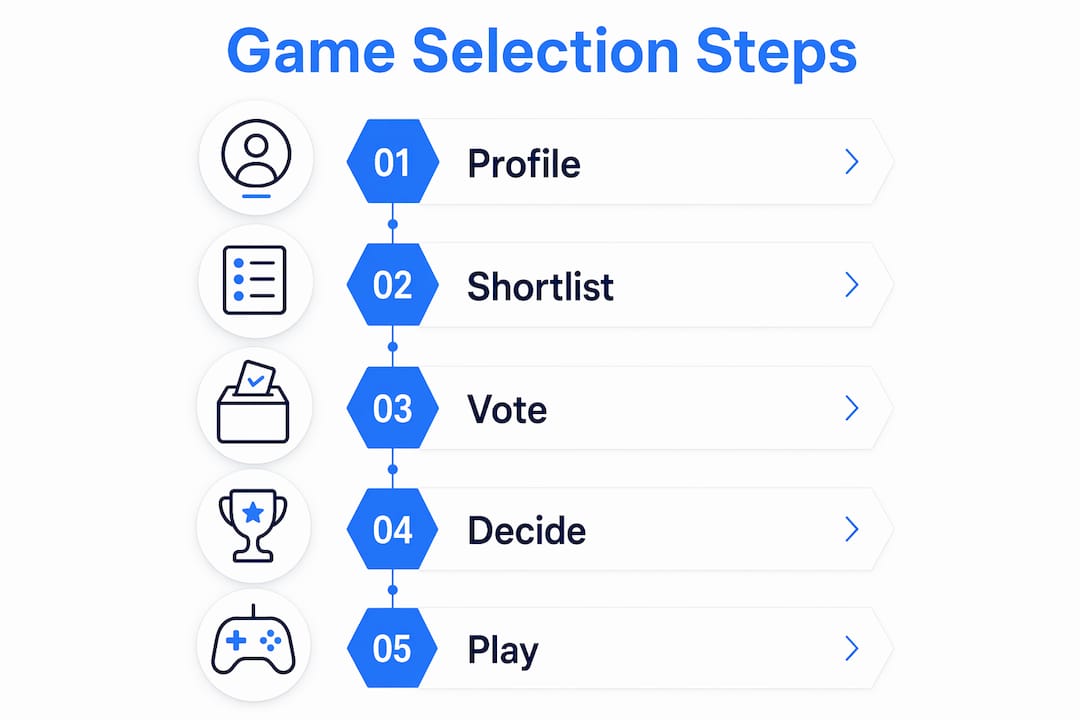
How do digital tools help you shortlist games faster?
Once you have your group profile, the next step is narrowing a large library down to three to five realistic candidates. This is where digital filtering tools earn their place.
Most game libraries, whether on a console, PC, or a dedicated platform, let you filter by player count, genre, price, and game mode. Use those filters first. A library of 200 games becomes 20 in under a minute when you apply player count and session length constraints. From those 20, apply your mood filter manually. You should land on a shortlist of three to five titles.
For the final pick from that shortlist, a digital wheel spinner with weighted choices removes the last layer of indecision. Digital spinners with weighted choices and elimination mode reduce decision fatigue during game selection. They also build a fair queue without repeats, which matters when your group meets regularly. Weighted spinners let you give more weight to games that suit tonight's mood, rather than treating every option equally.
| Feature | Basic random picker | Weighted spinner | Elimination mode |
| --- | --- | --- |--- |
| Equal chance for all options | Yes | No | No |
| Adjustable weighting | No | Yes | No |
| Removes played games | No | No | Yes |
| Suits regular groups | No | Yes | Yes |
| Setup time | Under 1 minute | 2–3 minutes | 2–3 minutes |
A weighted spinner suits most groups best. It respects individual preferences while still producing a quick, fair result.
Pro Tip: Set up your weighted spinner before the group arrives. Assign higher weights to games that match tonight's mood profile. That way, the spinner does the work and the result feels considered rather than random.How to run the game selection process step by step
With your shortlist ready and your tool set up, the actual selection takes under five minutes. Here is the process in order:
1. Confirm your shortlist of three to five games. Each title should cover a different mood or style so the group has genuine variety. A rotation of 3–5 games covering different moods prevents burnout and accommodates variable attendance.
2. Run the spinner or picker once. Accept the result. Agree as a group beforehand that one spin is final. This single rule eliminates 90% of post-decision arguments.
3. Give everyone 60 seconds to raise a hard objection. A hard objection means the game genuinely does not work for someone, for example, a player does not own it or cannot run it on their platform. Preference is not a hard objection.
4. If a hard objection stands, spin again. Remove the blocked title from the wheel first. This is the elimination mode in practice.
5. Confirm setup time and assign roles. Who is hosting the session? Who explains the rules? Sorting this immediately keeps momentum going.
A few things to watch for during this process:
- Avoid letting one outspoken person veto options based on personal taste. The rubric and the spinner exist precisely to prevent this.
- Do not ignore player count at the last minute. If two people drop out after the spin, check whether the chosen game still works at the new count.
- Never skip the setup time check. A game that takes 45 minutes to set up is not a quick win for a two-hour session.
The process works because it separates the criteria decision from the game decision. Your group agrees on what matters before any title is on the table.
How do you fix common problems with group game selection?
Even a well-run process hits snags. Here is how to handle the most common ones:
- Persistent disagreement. If your group cannot agree on criteria, start smaller. Agree only on player count and session length. Those two filters alone cut most libraries by half.
- Skill gaps between players. Pair experienced players with newer ones in cooperative games, or choose titles with adjustable difficulty. Ignoring skill gaps is the fastest way to lose a player's interest mid-session.
- Stale rotation. Update your shortlist every few sessions. Add one new title each time and remove the one your group has played most recently. This keeps the rotation fresh without requiring a full rebuild.
- Late arrivals. Keep one or two simple, low-setup backup games ready for moments when attendance changes or energy dips. Social deduction games and trivia formats work well here because they scale easily and need almost no setup.
- Technical compatibility surprises. Crossplay issues between PC, console, and mobile players are a common late discovery. Settle platform compatibility as part of your initial group profile, not after you have already spun the wheel.
Key takeaways
A quick group game selection method works because it separates the criteria decision from the game decision, removing subjectivity and reducing the time your group spends debating before play begins.
| Point | Details |
| --- | --- |
| Profile your group first | Confirm player count, experience level, mood, and platform compatibility before opening any library. |
| Use complexity ratings | Games rated 1.5–2.5 complexity suit mixed groups best and reduce the risk of someone disengaging. |
| Build a shortlist of 3–5 games | Cover different moods so the rotation works regardless of who shows up or how the evening feels. |
| Let a weighted spinner decide | Weighted digital spinners produce a fair, fast result that respects group preferences without debate. |
| Keep backup games ready | One or two low-setup titles handle late arrivals, energy dips, and unexpected player count changes. |
Pickthe's take on making game night actually work
The biggest mistake groups make is treating game selection as something that happens on the night. It does not. The groups that consistently have good sessions do the thinking beforehand. They know their rotation, they know their backup options, and they have agreed on how decisions get made. The actual selection then takes minutes, not half an hour.
Technology helps, but it does not replace judgement. A weighted spinner is only as good as the shortlist you feed it. If your shortlist is wrong for tonight's mood, the spinner will pick the wrong game efficiently. The human step, reading the room and profiling the group honestly, is what makes the whole process work.
The other thing worth saying plainly: flexibility matters more than the perfect game. A group that plays a slightly suboptimal title with good energy will have a better night than one that spends 40 minutes finding the theoretically ideal choice. Accept the result of your process and commit to it. The fun comes from playing, not from selecting.
> — Pickthe
Pickthe makes group game selection faster for everyone
Finding a multiplayer game that works for your whole group, across different platforms and preferences, is exactly the problem Pickthe was built to solve.
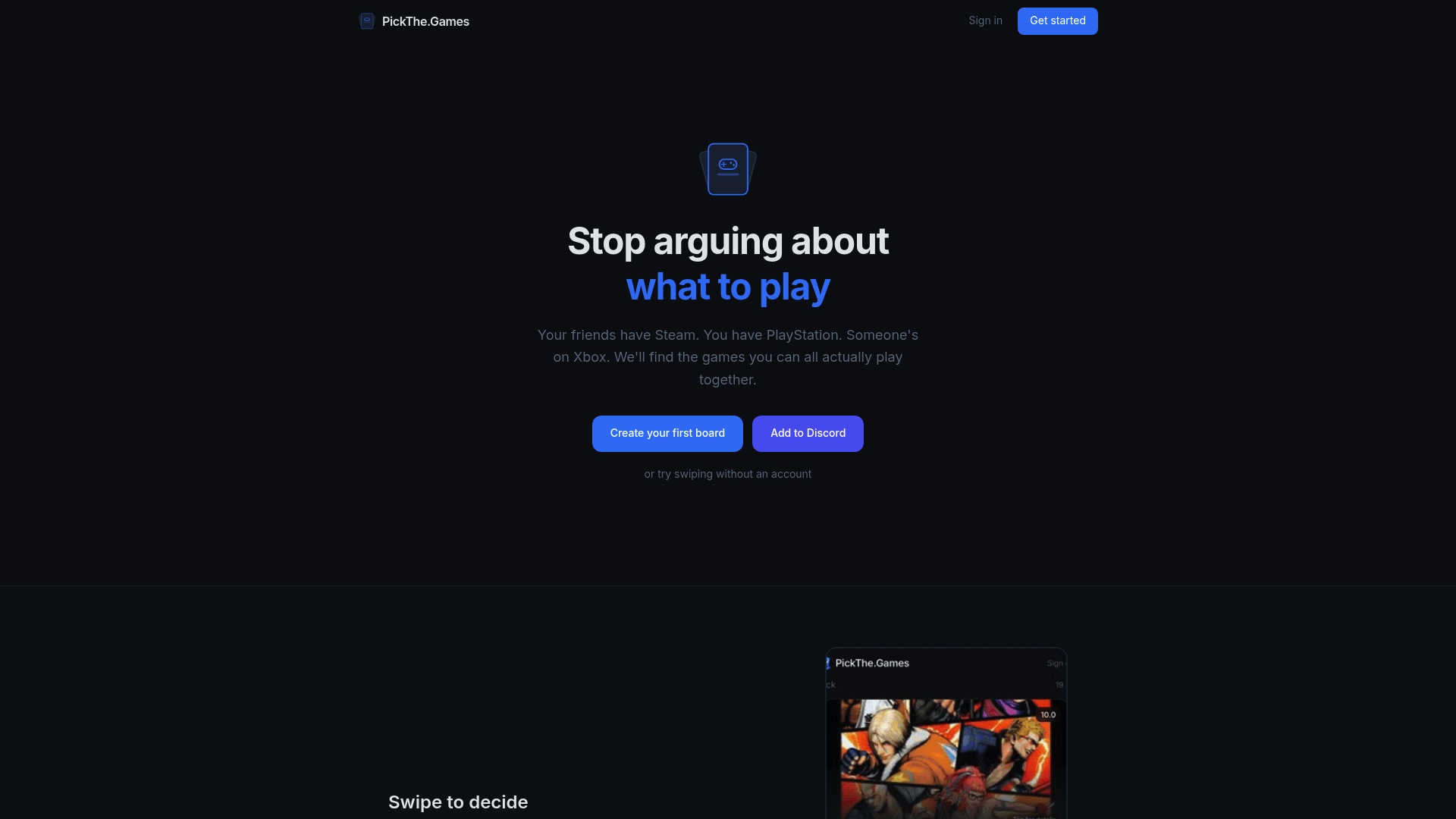
Pickthe gives your group a shared board where everyone swipes through game options. The platform cross-references platform compatibility, group size, and individual preferences in real time, using a database of over 6,000 games. The result is a shortlist your whole group has already voted on, without a single argument about what runs on whose console. It integrates directly with Discord, so you can run the whole group game selection process inside your existing chat. No paywalls, no friction. Just a fair pick your group can get behind.
FAQ
What is a group game shortlisting process?
A group game shortlisting process is a structured method for narrowing a large game library down to three to five suitable titles based on criteria like player count, session length, mood, and platform compatibility. It replaces open debate with a clear filter sequence, which reaches consensus faster.
How do you choose a game for a mixed-experience group?
Choose games rated between 1.5 and 2.5 on standard complexity scales. These titles are accessible enough for newer players while still engaging for experienced ones, and they significantly reduce the risk of someone disengaging mid-session.
How long should game selection take?
A structured selection process should take under five minutes once your group profile is set. Profiling the group upfront, confirming player count, mood, and platform, takes another two minutes and makes the selection itself much faster.
What is the best way to make a fair final choice?
A digital wheel spinner with weighted options and elimination mode produces a fair result quickly. Agree as a group that one spin is final, with hard objections allowed only for genuine compatibility issues rather than personal preference.
How do you handle late arrivals during game night?
Keep one or two low-setup backup games ready at all times. Social deduction games and trivia formats scale easily across different player counts and need almost no preparation, making them reliable fallbacks when attendance changes unexpectedly.